
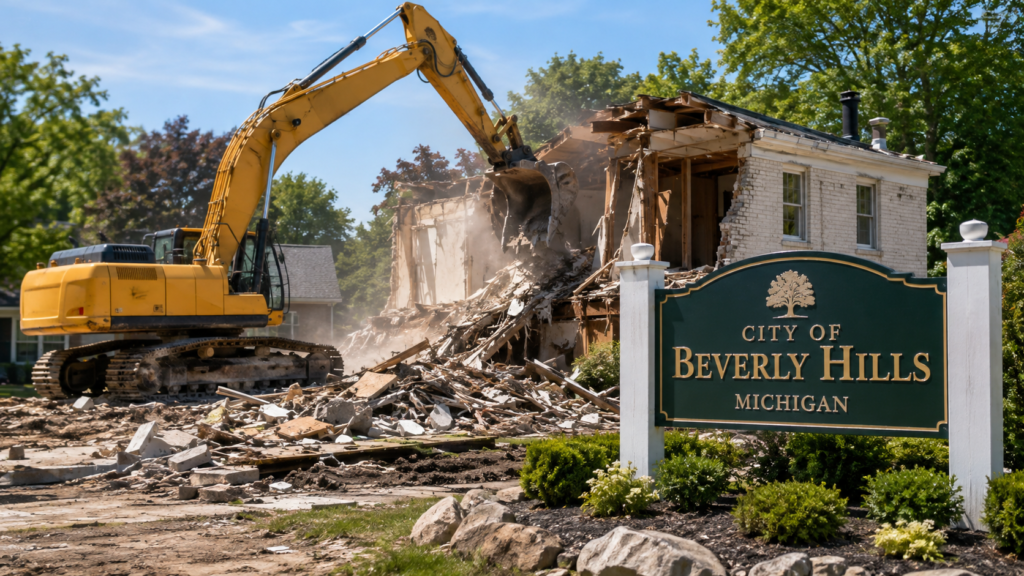
Beverly Hills is a quiet residential village within Southfield Township, made up largely of ranch and colonial-style homes built during the post-war expansion of the 1950s and 1960s. Because so many of the village’s homes share a similar age and construction style, demolition needs here tend to center on residential teardowns, garage removals, and renovation-related demolition rather than large commercial work. This guide breaks down what property owners should understand about the Demolition Contractor Beverly Hills process before starting a project.
Common Demolition Projects in the Village
Given the age of Beverly Hills’ housing stock, full residential teardowns are among the most common demolition projects, often driven by a desire to replace an aging ranch home with new construction that better fits a family’s needs. Partial demolition is also common, particularly when homeowners are removing an outdated addition or gutting a kitchen and bathroom as part of a larger remodel. Detached garages, many of which were built to a smaller footprint than modern vehicles require, are another frequent target for removal and replacement.
Starting With a Site Assessment
Every demolition project should begin with a thorough site assessment. In a village like Beverly Hills, where homes sit relatively close together on established lots, this typically includes evaluating how equipment will access the property, identifying shared fence lines or driveways with neighboring homes, and noting any mature trees or landscaping that need protection during the work.
Permitting and Utility Disconnection
A demolition permit is generally required before any structural work can begin, and this typically involves submitting plans to the appropriate local building authority. Utility companies also need to be notified so that gas, electric, and water service can be safely disconnected and capped ahead of demolition. This step is essential not just for regulatory compliance but for the safety of the demolition crew.
Checking for Hazardous Materials
Because a significant portion of Beverly Hills’ homes were built before the 1980s, a pre-demolition hazardous materials survey is a standard part of the process. This survey checks for materials such as asbestos siding, insulation, or vinyl flooring adhesive, all of which were common in mid-century construction. If any hazardous materials are found, they must be abated by licensed professionals before mechanical demolition can move forward.
How the Physical Demolition Happens
Once permits are in place and hazardous materials have been addressed, the physical demolition can begin. For a full home teardown, this usually involves mechanical equipment that can efficiently bring down the structure. For partial demolition or interior work, a more selective, hand-based approach is often used to preserve the parts of the structure that are staying in place. Throughout the process, debris is typically sorted into categories like wood, metal, and concrete to support recycling efforts.
Depending on the size of the home and its distance from the street, contractors may also need to plan a specific staging area for equipment and debris containers, particularly on Beverly Hills’ more established streets where curb space and driveway width can be limited.
Protecting Neighboring Properties
Given the tighter lot spacing common in Beverly Hills, protecting neighboring homes and landscaping during demolition is a top priority. This can include installing protective fencing, using dust suppression techniques like water misting, and carefully planning the direction in which a structure is brought down to minimize vibration and debris spread toward adjacent properties.
Some homeowners also choose to walk the shared property line with a neighbor before work begins, noting the existing condition of fences, driveways, or landscaping. This simple step can help resolve any questions quickly if a dispute over incidental damage were to come up later in the project.
Site Cleanup and Grading
After debris is removed from the property, the final phase involves grading the lot so it sits level and drains properly. This step is particularly important if new construction is planned, since a properly graded lot is essential for a stable foundation and effective water management.
What Affects Project Timing
The size of the structure, whether hazardous materials are present, and current permitting timelines with the local building department all affect how long a demolition project takes. Seasonal weather is another factor, as Michigan’s winter freeze can make excavation and grading more difficult compared to warmer months.
Signs a Home May Need Demolition Rather Than Repair
Given the age of most homes in Beverly Hills, a few structural indicators tend to signal that demolition may be a more practical path than continued renovation. These include significant foundation cracking or settling, extensive water damage affecting the framing, prolonged roof leaks that have caused secondary damage to interior structures, and evidence of long-term pest activity in load-bearing components. A qualified inspection can help homeowners understand whether a structure’s underlying issues are isolated and repairable or extensive enough that a full teardown makes more sense.
Mechanical Demolition vs. Selective Deconstruction
For a typical ranch or colonial-style home in Beverly Hills, mechanical demolition using an excavator is usually the most efficient way to complete a full teardown. However, when a homeowner wants to preserve specific materials, such as original hardwood flooring, cabinetry, or fixtures, a more selective, hand-based deconstruction approach may be used for at least part of the project before mechanical equipment finishes the remaining structure.
How Michigan Weather Affects Scheduling
Seasonal conditions play a role in when demolition projects are scheduled in Beverly Hills. Frozen ground during winter months can make excavation and grading more difficult, and many property owners prefer to plan larger projects for the spring through fall months when conditions are more predictable. That said, interior demolition work, which does not involve excavation, can typically proceed year-round without the same weather-related constraints.
Coordinating With Local Schools of Thought on Renovation vs. Rebuild
Because Beverly Hills is part of the Birmingham Public Schools district and shares a similar housing era with several neighboring communities, many homeowners weigh the same question when a structure starts showing its age: whether to renovate around the existing footprint or start fresh with a teardown. This decision usually comes down to the extent of structural issues present, how well the existing layout matches current needs, and whether the foundation and mechanical systems are still sound enough to build around. A qualified contractor can help evaluate which parts of a structure, if any, are worth preserving before a final decision is made.
What Happens on Demolition Day
On the day demolition begins, crews typically start by confirming that utilities have been disconnected and that the site perimeter is secured with fencing or barriers. Equipment is staged, protective measures for neighboring properties are put in place, and the structure is brought down in a planned sequence rather than all at once. For a typical single-family home, the structural teardown itself is often completed within a single day, with additional time afterward for debris sorting, hauling, and site grading.
After the Structure Comes Down
Once the visible teardown is complete, there is still meaningful work left to finish the project properly. Foundation removal, if applicable, typically follows the main structural demolition, along with backfilling the excavated area with appropriate fill material. Debris continues to be sorted and hauled off in stages, and the site is inspected to confirm that all utility lines have been properly capped below grade. Final grading is usually one of the last steps, ensuring the lot drains correctly and sits ready for whatever comes next, whether that is new construction or simply a well-maintained vacant lot.
Frequently Asked Questions
Do I need a permit to tear down a garage in Beverly Hills? In most cases, yes, since demolition permits typically apply to accessory structures as well as full homes.
How can I find out if my home has asbestos? A licensed inspector can conduct a hazardous materials survey before demolition begins, which is the most reliable way to identify asbestos-containing materials.
Will demolition damage my neighbor’s fence or driveway? Reputable contractors take precautions like protective fencing and careful equipment placement to minimize the risk of damage to adjacent properties.
What happens to the concrete from a torn-down driveway or foundation? It is commonly crushed and recycled as fill material or aggregate rather than sent to a landfill.
How long does a typical home teardown take in Beverly Hills? The physical demolition itself often takes just a few days, though the full process including permitting and utility disconnection can take several weeks.
What should I remove from the property before demolition begins? Personal belongings, salvageable fixtures, and anything you want to keep should be removed well ahead of the scheduled start date, since crews typically treat everything left in the structure as debris.
Does the village require notification to neighbors before demolition starts? Formal notification requirements vary, but even where not strictly required, letting adjacent neighbors know the expected timeline is considered good practice given how close many Beverly Hills homes sit to one another.
Homeowners in the village exploring a demolition contractor in Beverly Hills should feel confident understanding each stage of the process before committing to a renovation or teardown project.